
Shipped
FigmaNext.jsTypeScriptReactCursorDesign with conviction. Ship with purpose.
University of Michigan · Stamps School of Art & Design + School of Information
Projects
Work Journey replaces unverifiable resumes with a daily journaling habit that turns real work into verified skill profiles. The UX challenge was making AI verification feel credible, shareable, and worth coming back to, not like another productivity chore.
Shipped
Live product
AI
Verification
Skill ID
Shareable output
Daily
Journal habit
Traditional resumes are unverifiable and easy to fabricate. Work Journey needed a UX that made skill verification feel trustworthy, approachable, and worth the daily habit of journaling, while communicating a complex AI-driven product clearly to job seekers.
Focused on reducing friction in the journaling flow and making the AI verification output feel credible and shareable. Designed around the core user action: log work, get verified, share your Skill ID.
Shipped a live product at workjourney.ai with a verification loop that turns everyday work notes into a portable, shareable skill identity.


CarPlay
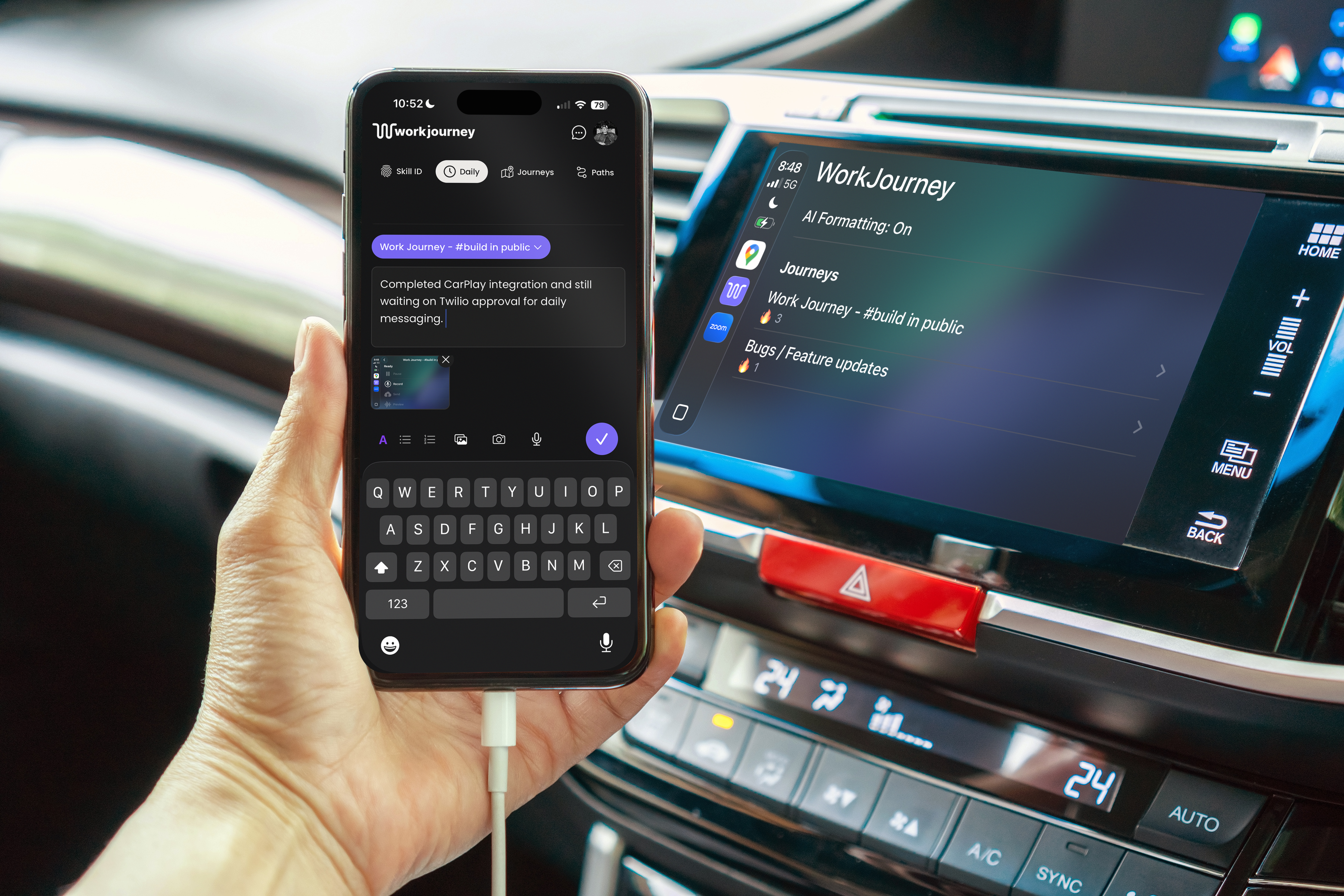
Record journal entries hands-free while driving, using Siri or the CarPlay interface. Journeys stay on the dash so you can log the day without picking up your phone.
CarPlay
Record journal entries hands-free while driving, using Siri or the CarPlay interface. Journeys stay on the dash so you can log the day without picking up your phone.

Testing with friends and peers
Full-stack mobile app built with React Native, TypeScript, and Firebase, featuring a custom gesture-driven navigation system with real-time drag animations, live push notifications, and image uploads. Owned the complete pipeline from UI/interaction design through EAS build configuration and TestFlight deployment, including diagnosing and resolving a production crash tied to environment-variable parity between local and CI build environments.
iOS
Platform
Daily
Use cadence
Friends & Peers
Current testers
Pre-launch
Status
Campus communities needed a lightweight way to surface opinions and rumors without tying votes to identity. Existing social platforms felt too permanent, too public, and too slow for the kind of rapid pulse-check HIT was designed for.
Designed around anonymous poll creation, swipe-based voting, and reaction loops that reward return visits. Prioritized legibility at speed, clear vote states, and UI patterns that make anonymity feel intentional rather than hidden.
Currently building QR Rooms: event hosts can spin up a room in seconds, which generates a scannable QR code and a six-digit join code. Print the QR code at the door, and anyone who scans in joins an anonymous chat scoped to that event. Attendees can react, post, and talk about what's happening in real time, without needing to know who's speaking.
Still pre-launch. Currently testing with friends and peers to validate the core loop before a wider release. Early use suggests the format has real pull: anonymous, fast, and built for the kind of everyday chatter that doesn't fit anywhere else. The goal is a space where people can express themselves candidly, without the weight of a permanent public profile behind every post.



Senior year project with lasting impact
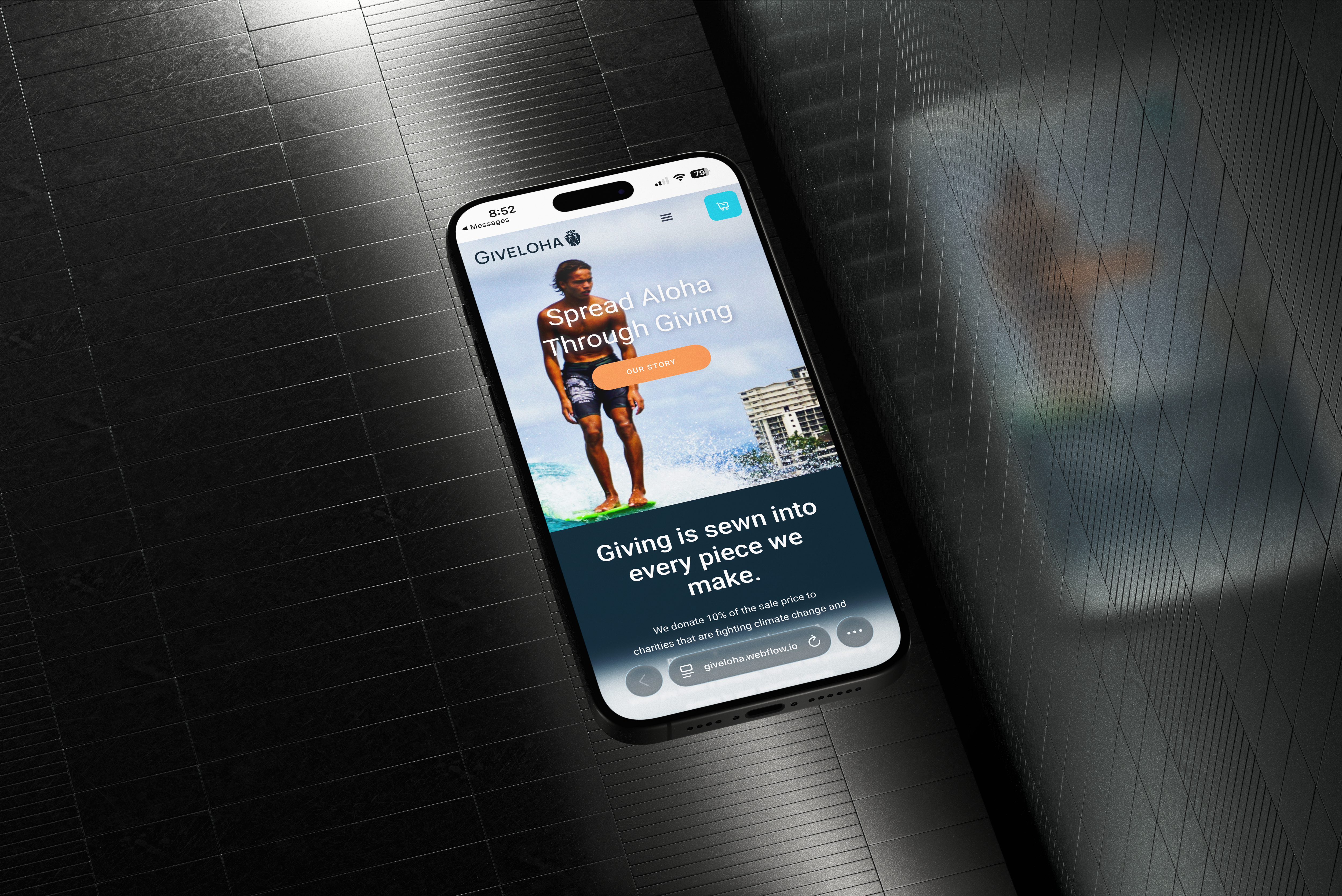
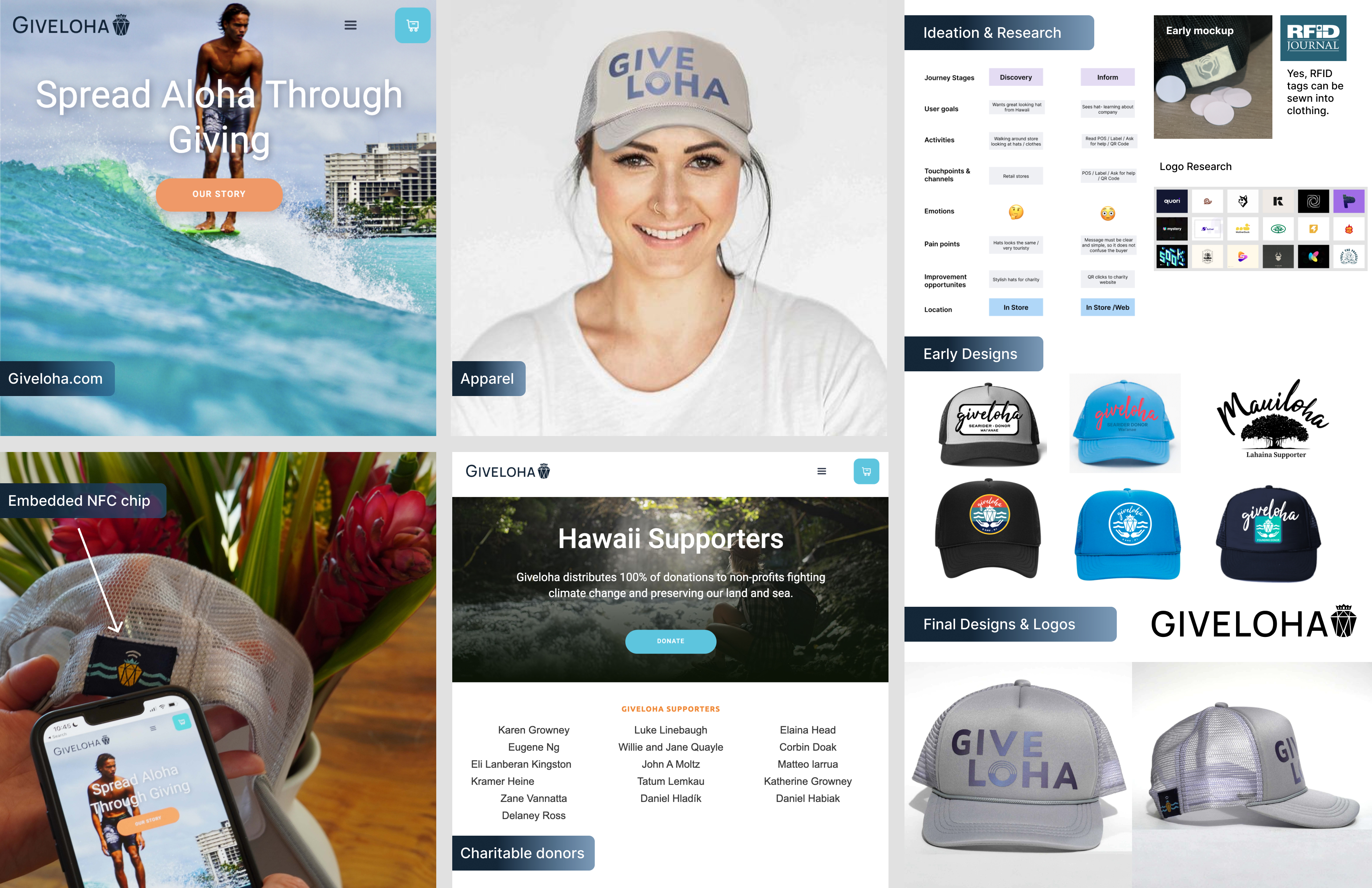
A clothing brand built to fund Hawaiian conservation. NFC-embedded hat tags link straight to a donation page, turning a wearable into a giving channel.
$5K+
Raised in donations
3
Partner charities
NFC
Embedded tech
2024
Senior year project
Wanted to promote donations for Hawaiian charities, but not just as a straightforward ask. There needed to be a real product behind it, something people could wear and be proud of, not just a donate button.
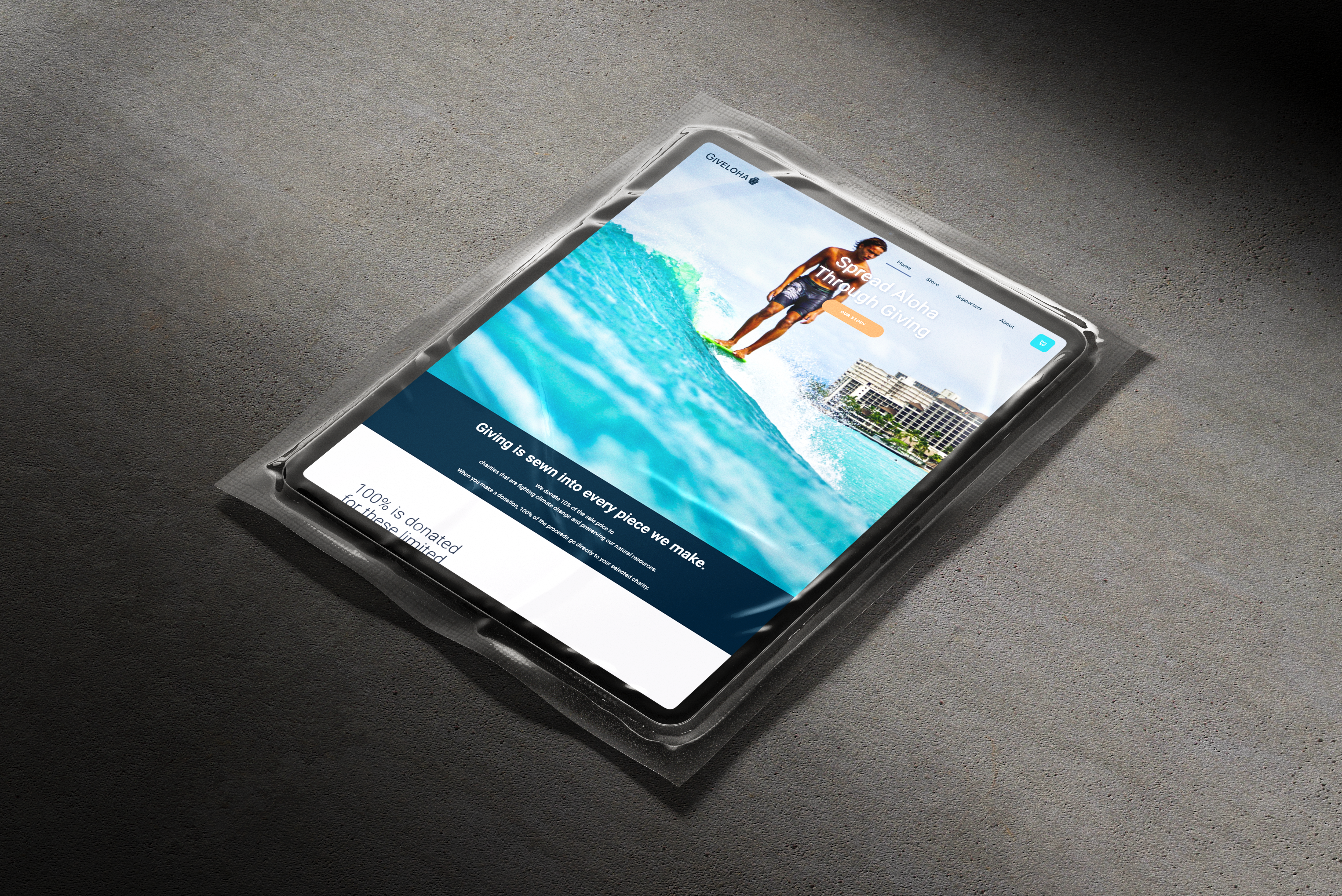
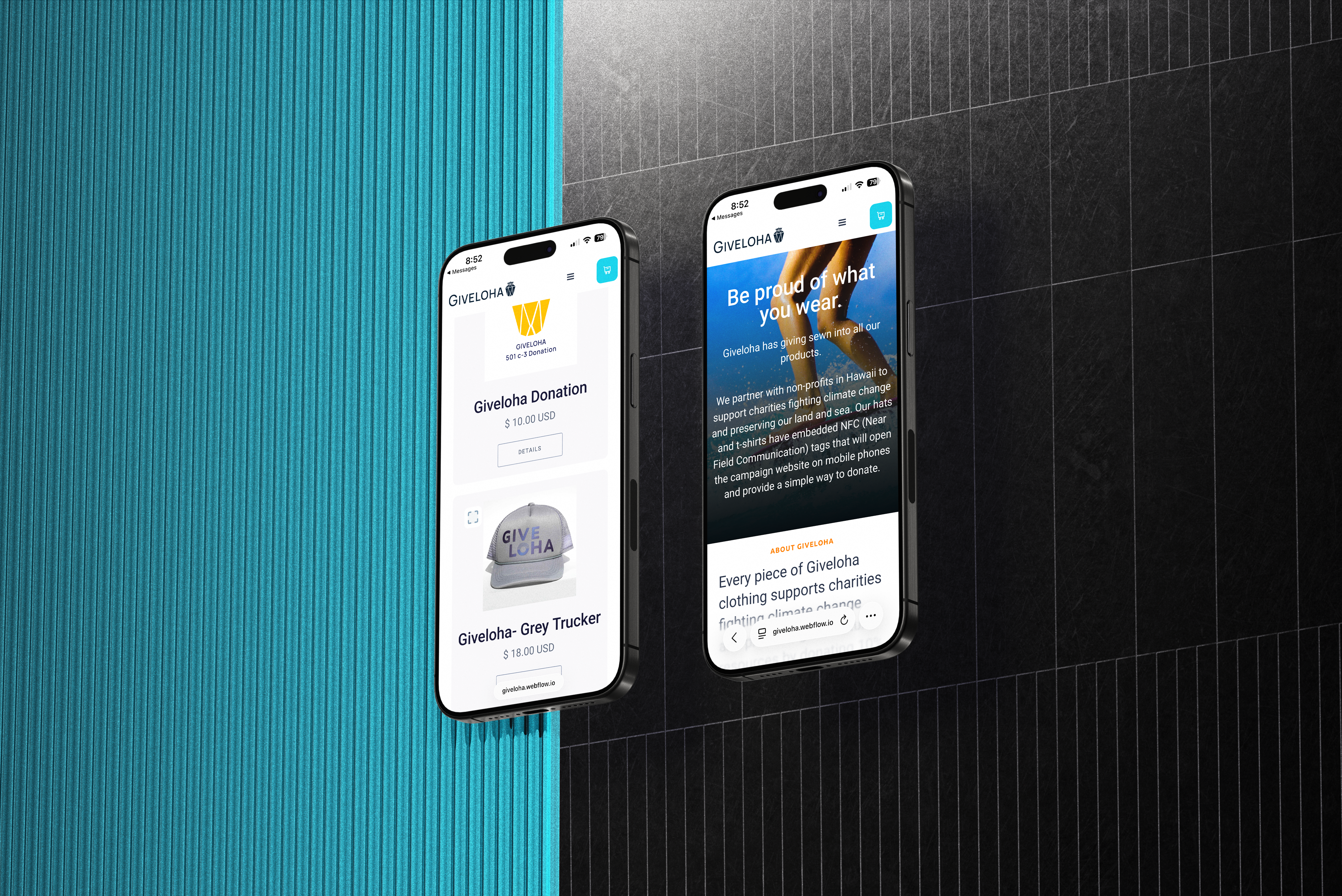
Built a clothing brand around embedded NFC tags: tap your phone to the back tag of the hat and it opens a donation page on the Giveloha website. Partnered with three Hawaiian charities chosen for their distinct focus areas: Hawaii Wildlife Fund, Hawaii Wildlife Center, and Conservation Council for Hawaii. Led a full social media campaign on Instagram to build awareness and drive hat sales.
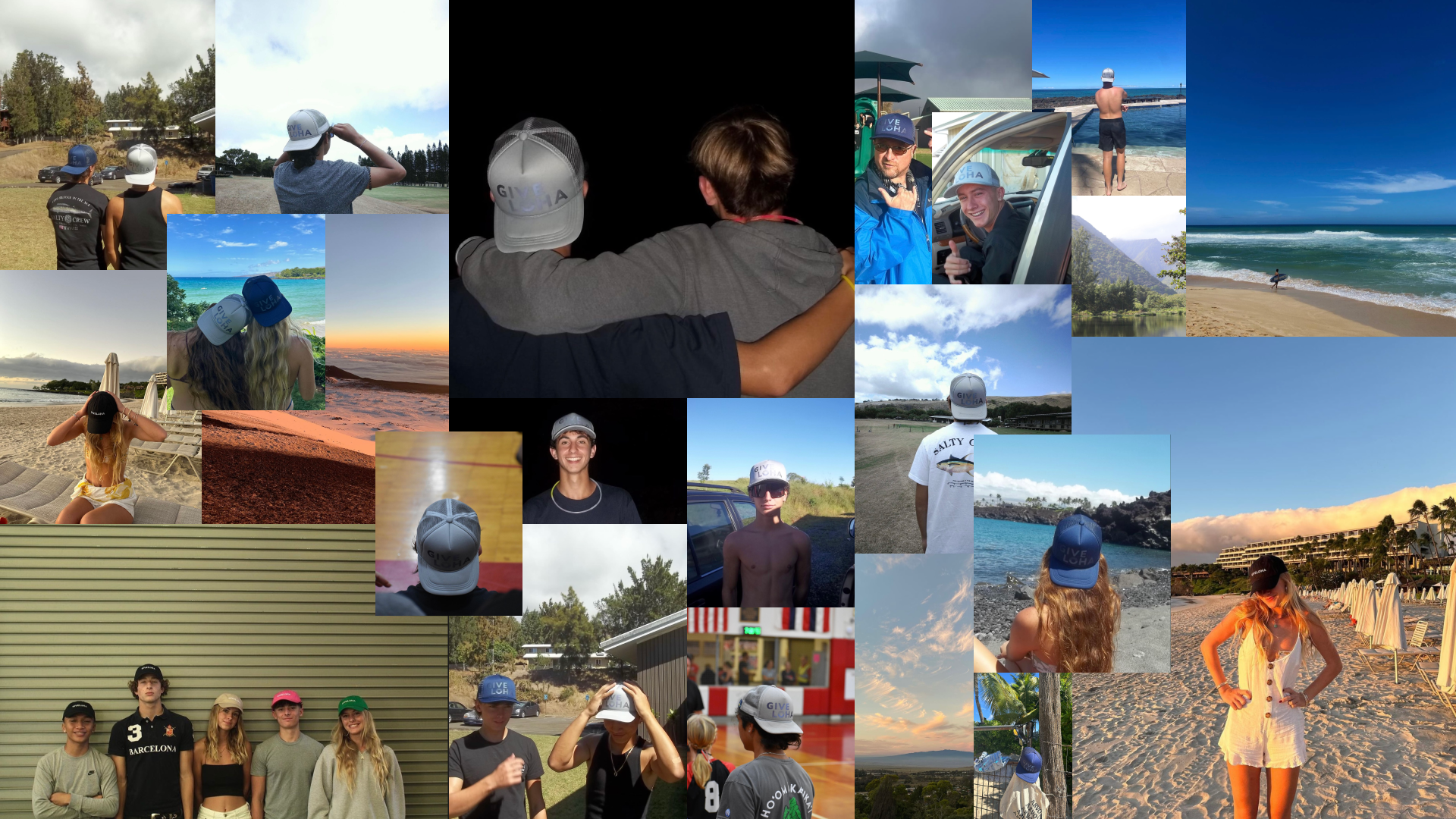
Raised approximately $5,000 in donations during senior year of high school. People are still wearing the hats today, well after the project wound down.

Tap to learn more
On HIT, I designed the swipe-to-vote interaction so answering a poll takes a second and actually makes you want to come back. Work Journey needed that same ease in its daily journal flow, or people would stop writing.
On HIT, I had to decide what a campus poll app actually needed and cut everything else. Work Journey called for the same discipline: ship something real people would use, not a feature list.
I built HIT as an iOS app and shipped it through TestFlight. When it crashed in production, I traced it back to a mismatch in environment settings between my local machine and the build server.
I built both the Work Journey site and the Giveloha page that opens when someone taps a hat. Whether it's a journal entry or an NFC tap, the site has to just work, every time.
Giveloha started as hats for Hawaiian conservation, not a donation form. The visuals, the Instagram presence, and the product itself all had to feel like one thing, and people are still wearing the hats.
HIT and Work Journey share the same components, type, and color logic so nothing feels inconsistent from screen to screen. That's what lets me move fast without the product falling apart.